


The Monster Guide is a Public Intelligence Portal
The Monster Guide is a Public Intelligence Portal
At the Monster Guide we study the most current and off-the-beaten path research reports and then we supplement that data with a mix of analysis and best practices that gives readers the practical insights they need to make insightful investment and planning decisions.
The Monster Guide is the public knowledge platform of the Institute for Anticipatory Intelligence. It exists to help citizens, researchers, educators, and policymakers recognize the large, unfamiliar forces shaping the future while those forces are still emerging.
Here's what's featured in our current newsletter - please subscribe.
AI Grows on Rail
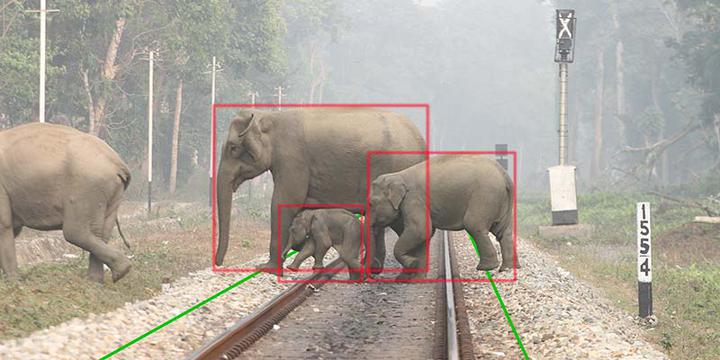
With the adoption of analytical AI and gen, Canada could help unlock the business potential that these new technologies can bring. Railway companies have already begun to implement various AI technologies for around 20 key use cases. Greater adoption could unlock an estimated $13 billion to $22 billion in impact a year, globally. In Canada, these efforts save thousands of wildlife incidents every year. Perhaps its time for communalities to create attraction strategies to entice related companies to cluster manufacturing efforts here in Canada?
COVID-19 Residue
The pandemic and corresponding national responses appear to be honing and accelerating several trends that were already underway before the outbreak. COVID-19 brought global health and healthcare issues into sharp relief, exposed and in some cases widened social fissures, underscored vast disparities in healthcare access and infrastructure, and interrupted efforts to combat other diseases. The pandemic also highlighted weaknesses in the international coordination on health crises and the mismatch between existing institutions, funding levels, and future health challenges. What’s going on in behind the scenes planning?
Compressed Air Energy Storage
(CAES) Opportunities
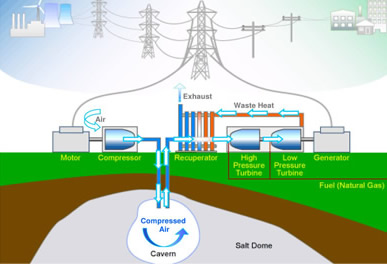
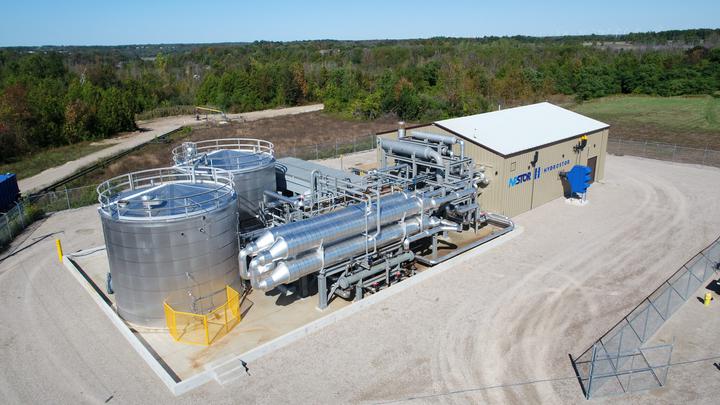
Compressed Air Energy Storage (CAES) systems convert excess electricity into potential energy by compressing air, storing it, and then using it to generate electricity when needed. These systems offer a promising solution for balancing electricity supply and demand, particularly with fluctuating renewable energy sources, and can provide long-duration energy storage. The opportunities are endless and cost effective for firming up the grid.
Smartmeters into the Future
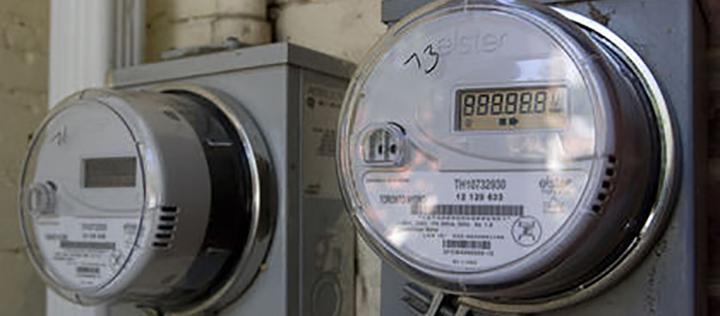
Did you ever wonder what all of that effort went into the Smartmeter conversion? We take a dive into the real strategies connected to Smartmeters as they carve off your household electrical circuit to charges your electric car. You need to know this.
Why is public broadcasting
still very Important?
We present five good reasons why the CBC is important and how it could reinvent itself as an anchor for the new Canadian economy. We will share stuff that you never thought of.

The Spread of Dead Shopping Malls
Dramatic trade issues will effect every community in Canada. A significant number of shopping malls were already experiencing closure due to factors like the rise of e-commerce, changing consumer preferences, and the economic impact of the pandemic. Studies and research indicate that a substantial portion of malls are projected to close in the coming years, with some projections suggesting up to 87% of large shopping malls may close within 10 years. Imagine your community with large shopping malls being mothballed. What happens to the tax base and the retail supply landscape? What will happen to the buildings and infrastructure? There have been people on this problem.
How the public healthcare model could suddenly become very exciting?
We take a look at the potential of Auryvedic Healthcare Clinics in Canada as being part of complimentary wellness strategy that could reduce the pressure on public healthcare – while still being public healthcare.
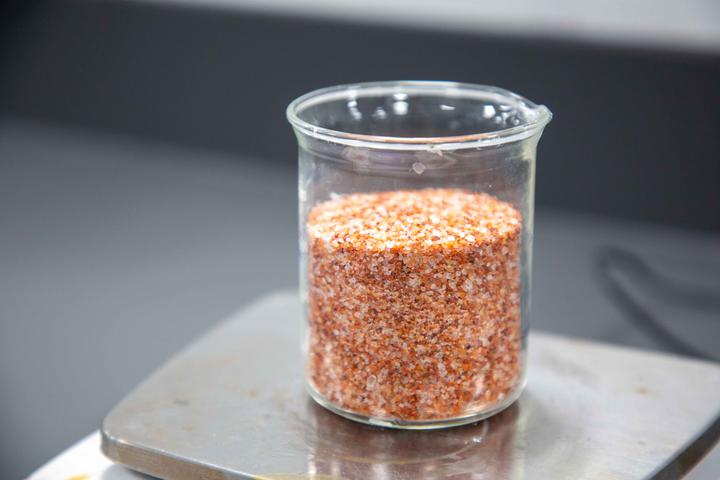
Potash: Canada’s Buried Treasure
A front and centre risk for the US is not having potash. The United States imports over 90% of its potash from Canada, and the total amount imported is close to 91%. The US produces very little potash, accounting for less than 10% of its needs. Potash is very hard to find on global markets and without Canada, Trump will have to use a Russian area code. Potash is a vital plant nutrient that is used in fertilizers. Industrial agriculture in the US is completely dependent on it.
Thank you for exploring The Monster Guide
and taking a look at what we do.
Throughout history, societies have described unknown threats and opportunities as “monsters.” The term does not imply danger alone — it refers to anything large, transformative, and not yet fully understood. Industrialization was once a monster. Artificial intelligence was once a monster. Climate change, global networks, demographic transitions, and new economic models all appear first as uncertain shapes at the edge of collective awareness.
The Monster Guide exists to map these shapes.
Rather than waiting for certainty, the platform documents early signals, intuitive observations, speculative models, and evidence-in-progress. It translates anticipatory intelligence research into forms that are accessible to the public while preserving intellectual rigor.
The portal operates across
several integrated channels
Research Newsletters provide regular briefings on weak signals detected across economic, technological, cultural, and ecological systems. These updates focus on pattern recognition rather than prediction, helping readers develop sensitivity to emerging change.
White Papers present deeper analytical work produced by the Institute and its collaborators. These documents connect intuitive foresight with empirical research, outlining possible future scenarios and identifying questions that require investigation.
Podcasts explore anticipatory thinking through conversation. Researchers, artists, entrepreneurs, historians, and community observers discuss how early awareness of change develops across disciplines. These dialogues highlight the human side of intelligence gathering — curiosity, uncertainty, imagination, and interpretation.
Documentary Features examine moments in history when societies first encountered transformative change. By studying how earlier generations recognized — or failed to recognize — emerging realities, viewers learn how anticipatory intelligence operates across time.
Educational Tools help individuals and institutions practice foresight skills. These resources include scenario-building exercises, signal-detection methods, and frameworks for translating intuition into research questions. The goal is not to train people to predict the future, but to help them become more comfortable thinking at the edge of evidence.
The Monster Guide serves a civic function as well as an educational one. It creates a shared language for discussing uncertainty in public life. By making early-stage intelligence visible and understandable, the platform reduces fear of the unknown and encourages collaborative preparation.
In this way, the portal acts as a bridge between imagination and evidence, between research institutions and everyday citizens, and between present conditions and future possibilities.
The Monster Guide does not claim to identify the future with certainty. Its purpose is to help society recognize what may be approaching — and to begin asking better questions sooner.
Because the future rarely arrives quietly. It usually appears first as a monster we do not yet understand.
SUPPORT
You can support the Monster Guide by subscribing or attending one of our live or online events; sponsoring our efforts or visiting our store.
THIS ISSUE