

Google
Helping travelers understand
travel fear and the unknown.
*
monster
the
guide
Prevention Guide
The Okanagan's neo-indigenous
and independent news network.
Explore Today's News
Wineries, fall colours, harvest and adventure in the Okanagan
October and November represent a chance to experience fall colours and great activities all mixed with some winetasting.
Read More...
Tourism: the victim and the vector of climate change and poverty
This past month the World Tourism Organization (UNWTO) became the latest international body to commit to convincing the tourism industry to be part of the climate change solution, not part of the problem.
Read More...
Bear caution in the
company of fall colours
Bears are on the move, wandering to consume as much food as possible to prepare for hibernation. In the Okanagan this means dining in orchards and gardens and in patches of wild berries as well as looking for insects to feed on.
Read More...
Virtual Reality poised to compete with the real economy
There is a little publicized technological revolution playing out that is setting the stage for virtual reality to make a giant leap into our lives.
Read More...

Visit our news portal with feature links from BC and around the world.
research
bioregion
Economy sinks but arms sales up 50 percent
Fires/Insects: Natural Forest Disturbances
1993: Insect impacting pine trees discovered
$71.2 Trillion in "Unallocated" Derivatives
Another view of economic collapse
BC - Explaining the economic crisis
More and more Sasquatch sightings
B.C. enters wind energy era
New Earth Shot: The Apollo Project
Sasquatch sighting reported
Kelowna: Hard to find marijuana in forests
Co-op Thrives in Tough Times
Ahmadinejad: U.S. empire nearing end
Sierra Club
Roots Canada Ltd.
textbookx.com (Akademos, Inc.)
The Okanagan's neo-indigenous and independent news network.
Terms and Conditions of the Website
Copyright 2007 - All Rights Reserved
Contact Us
e-zine
An E-zine from The Monster Guide
Learn how the environment, habitat
and the nature of British Columbia is changing.
this issue...
Visit Our Changing Planet
Sign InView Entries
Send a comment to The Monster Guide
Enter the Guestbook link below
bc headlines
just in....
The Secret Plan
The BC government has ideas on how it wants to react to climate change. It also has an idea about how it wants to spend it's carbon offset investment. All of these ideas are linked in some way to the new carbon tax. This little known document, should you decide to open it, will give you some idea about those ideas.
Take the risk, you may not want to know...
inside politics
Breaking news from inside BC politics from The Public Eye...
Life on the Grid Part 2:
Our Future on the Grid:
Big Spending and Rolling Blackouts?
Read Life on the Grid - Part 1
By Don Elzer
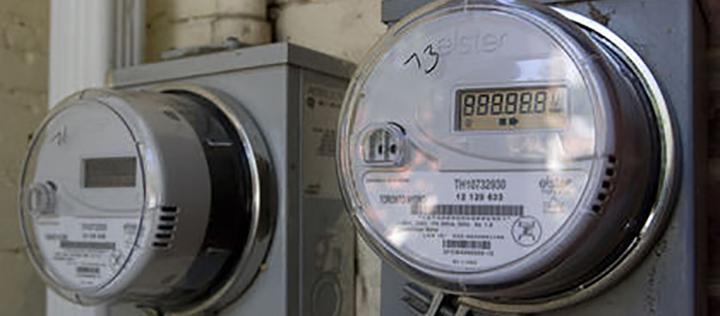
Earth Hour gave a good example of how a global effort might be designed to have the public voluntarily create a blackout so that big utilities can save energy....so they can sell it to someone else. The Monster Guide examines Rolling Blackouts and Brownouts. Learn about how an energy shortage is managed by utilities.
Last summer, a bird playing havoc on a transmission line caused 10,000 Kelowna area residents to be without power for a couple of hours, we might complain that this is a heck of a lot of damage resulting from a bird on a wire, but keep in mind, it was a broken branch that caused 50 million people to be without hydro a few years back.

READ THIS FEATURE..
Patrick Minnis spokesman at NASA's Langley Base said, "That connection to the greenhouse effect is still murky. But there is evidence that contrail clouds can have a big impact on weather patterns. In the wake of Hurricane Nora, researchers got their most dramatic view yet: Moist air blanketed the nation's midsection from Nebraska to Texas, and scores of contrails fused into one enormous cloud - stretching for more than 800 miles."

READ THIS FEATURE..
By Don Elzer
Could jet-caused clouds be enough to affect climate? "The number of clear days over the U.S. has decreased in the last 30 years, and we suspect that much of that is due to an increase in cirrus clouds, which we suspect is probably due to an increase in air traffic," And if such clouds trap heat, could they even contribute to global warming?
Monster Guide Series Part 2:
Chemtrail and Countermeasure Chaff Scenerios:
Evidence links harmful emissions to contrails
Don Elzer tells a story of what the ancient landscape of the Okanagan and the Monashee may have been like as the last great ice age began to retreat. This is a speculative account however there is new scientific evidence surfacing that sheds new light on the fantastic changes that occurred here 15,000 years ago.
feature
The Rendezvous Chronicles - Episode 1
A Mystery Unfolds in the Monashee and Okanagan:
An Ancient Inland Sea Exposes a New World
The southcentral interior of British Columbia is rich in natural history, in particular the Okanagan Valley as it links north to the interior plateau and east to the Monashee Mountain range. In this region geological history unfolds beginning with a torrent of molten lava caused by eons of volcanic activity.

Read this first episode from the Rendezvous Chronicles at The Other Beaver
This special report can be found in the Spring 2008 issue of Okanagan Arts Magazine now available on newsstands. Don Elzer provides a case study in arts planning based on his experience in the Okanagan, he articulates a strategy for growth and change that includes all stakeholders in the process and proposes new actions.

Read this Special Report
from the Okanagan Institute online

The State of Cultural Stewardship in the Okanagan
Special Report from Okanagan Home Magazine
By Don Elzer
Ecological planning has been around for a long time, and continues to re-surface as a method by which we can approach sustainability, and every time it does, it’s gift wrapped in a different way. But each time it fails because when the wrapping is removed, the same package appears which has a lack of substance.

Why? Because often the people promoting it don’t really believe the message.
More People, Less Valley – More Homeless
Riding the rails in Kamloops during the Great Depression
To further the problem, this lack of substance is combined with a negligent belief that delivering good ecological planning requires more money than not doing anything at all.

READ THIS FEATURE..
The Pulp-Free Age: Newspapers have had their day
By Dennis Stranack – May 27, 2008
A few weekends back the Globe and Mail ran a two-page spread featuring playwright and novelist Rick Salutin’s musings following his stroll through the newly opened ‘Newseum’ in Washington, D.C.

Far more interesting, not that I have anything against musings, was a timeline that ran as a sidebar to the main piece, bulleting the entire history of the media from the first known wood-block-printed Buddhist scripture sometime before the year 705 right up to Google’s recent failed attempt to acquire Yahoo! for 47.5 billion bucks.
The medium is the message still…gotta go pulp free…Over 100 lbs of direct mail flyers in your mail box every year? Okanagan-wide that’s 30,000,000 pounds of advertising paper that no one asks for. Kevin Allman shares his thoughts about the waste of it all – Read his blog
It was interesting less for the 70 or so specific stops in the quick tour of nearly two millennia, fascinating though they were, than for it’s graphic illustration of a reality that those of us who love newspapers – or any other mainstream media for that matter – may not welcome but that we would nonetheless be idiotic to ignore.

THE END IS NEAR - READ MORE...
By Dennis Stranack – May 27, 2008
Representatives of NORD and the City of Vernon suffered the traditional fate of messengers at an information meeting about the Agricultural Land Reserve last Tuesday as several frustrated farmers in an audience of about 40 dominated a question and answer period at the end of the meeting by venting their frustration with the land reserve.
Farmers: ‘If you save the farmer you save the land’
Sparks fly at NORD-City of Vernon ALR info session
“What happened to making sure farming is viable?” came the first shot from the audience, indicating controversy is another thing about the ALR that remains unchanged in roughly 35 years. The farmer asking the question reminded Passmore the act had at one time included provision for aid for struggling producers.

Passmore acknowledged the commission has shifted focus to a more regulatory role. “So they just forgot about it,” the farmer suggested. Another producer in the audience waded in with an angry denouncement of newly implemented meat processing regulations. “They’ve shut down beef and poultry producers in this community".

READ THE WHOLE STORY....
Food for Fuel it's not:
Algae on the beach today may fuel SUV's tomorrow
An ancient, living and intelligent plant poised to drive the planet
By Don Elzer
Presently, plants struggle as humans continue to be the primary consumers on the planet, and now blue-green algae is being positioned to once again become an instrument of the planetary continuum,
only this time its role might prove to question the motives of the human experience on this planet. When it comes to converting sunlight into biomass, algae is the most productive type of plant. Biodiesel from algae has the potential to produce enough fuel to drive a Prius-type car 370,000 miles per acre per year (MAY), compared to 2,000 to 31,000 MAY for conventional biodiesel crops, while ethanol from switchgrass could produce 32,500 MAY.  Furthermore, some strains of algae are as much as 40% oil by weight, leading to the hope of a large supply of oil which is much easier to convert into biodiesel than it is to ferment corn into ethanol.

Read nothing but the truth...as we know it...
Eight microearthquakes of magnitude 2-3 occurred on October 10 and 11, and more than 100 tremors of less than magnitude 2 had occurred between October 10 and October 18.
This steady rumble is believed to be volcanic activity.

Learn more…
The Nazko Cone:
Mixing a volcano with a decaying forest?
By Don Elzer
Some surprising events continue to occur in the British Columbia interior that places us on center stage as we see our planet transforming as a result of environmental changes. On Wednesday October 10, 2007, the first of a swarm of small earthquakes was recorded by seismic monitoring equipment in place in the upper Baezaeko River region, about 100 km west of Quesnel.
news scan
ego index
As non-conformist media we love to tell you "we told you so". Here's where you can find just how well The Monster Guide measures up to the deep pockets of those other folks...
Explore Our Monster Ego....
Double Vision in the Okanagan Valley
Bioregional look at the big picture
Double boat traffic on big Okanagan Lakes?
Hwy closure wreaking havoc on commuters
Bankruptcies climb in B.C.
Hope: Cemetery dispute heats up
Another view of economic collapse
Salmon Arm: Proposal for pond changing
Kelowna: Credit crunch halts condo
Basin-wide Hydro Compensation Agreement
Bomb Attacks in BC Oil Patch
BC - Explaining the economic crisis
Campbell Says No Going Back On Carbon Tax
Cabin development called ‘a tragedy’
UBCM asks for 150 changes to legislation

Where does Robert Redford find the time?
The Apollo Project is shaking the big energy tree in the US and TMG thinks that the wave will hit Canada and BC any moment
(if we had our way). Check it out.
Everything about the latest new Earth shot....
Forget corn - buy yourself an algae reactor

What do you believe is the most important election issue that will impact you directly?                           
The Economy
Climate Change
Food Security
Health
Education
Job and Workforce Issues
International Relations
War in the Middle East

ogo poll
Send a message and make some waves
A quest for building lots in pristine areas
A looming issue that’s about sprawl first and taxes second
By Don Elzer
In the Okanagan we know all to well how seasonal residents have impacted real estate prices. This part of the real estate market has caused a boom in our regional economy that will probably continue - at least that what we keep telling ourselves.

Golf resorts, ski villages and waterfront resorts remain key destinations for Calgary, Vancouver and Edmonton residents seeking to purchase their summer or winter retreat here, then eager to place the property in a rental pool that promises to turn the property into a revenue generator.
Rural housing developments like this one in Invermere, BC might be "creating a new property tax class"  - demand may also be positioning forest companies to become the new real estate development giants in our future.
When our provincial government launched its Resort Task Force, a key mission was to move crown land into resort housing, that action certainly primed the marketplace. Now, with the forest industry in a downward cycle many of those forest companies are turning to real estate development to prime revenues. The trend is not isolated to BC.

READ THIS COMPLETE FEATURE..
Stickhandling trade between two nervous giants
A regional trade deficit with a view of the American and Pacific Rim marketplace
By Don Elzer
As the North Okanagan begins to consider the idea of an inland port it would be wise for all of us to begin to ponder just how global trade will change in this upcoming decade.

The taste for Canadian made products remains very thin in both China and the US as they become preoccupied with competing against one another for economic dominance.

Regionally, the Okanagan has a trade imbalance, we demand consumer goods from overseas markets and we produce very little, and even our natural resources such as forest products remain in a slump. There’s much we can learn from China as they grow their economy from manufacturing.

A new study of worldwide technological competitiveness suggests China may soon rival
How we love and want our "stuff" by the container ship load.
rival the United States as the principal driver of the world's economy -- a position the U.S. has held since the end of World War II. If that happens, it will mark the first time in nearly a century that two nations have competed for leadership as equals.

READ THIS FEATURE..

Hidden dynamics of the local food security challenge
Tempers flare - multinationals make billions in the global food crisis
By Don Elzer
This past month three fields of genetically modified (GM) maize were destroyed in southwest France, where activists targeted corporate research facilities owned by Swiss agrochemicals company Syngenta and Pioneer, a unit of DuPont Co, near the city of Condom and another target, near Mauroux, was owned by U.S. biotech giant Monsanto.
President George W. Bush touring the Dupont Labs - supporting a different idea of food security - many in the world cringe at the growing agribusiness domination
Attacks on GM tests have become common practice in France, Europe’s largest grain producer, where the use of biotech crops is widely opposed because of fears they could harm humans and wildlife by triggering an uncontrolled spread of modified genes.

READ THE WHOLE STORY....
By Don Elzer
We are now paying a Carbon Tax here in BC and the move represents one of many intended to bring about a new era of direct investment into our environment. Between now and the end of this year just about everyone will know what a carbon-offset is.
Carbon-offsets will be at the core of the US presidential race; they will be the chief point of discussion as we re-negotiate free trade; and they may be used to prime the financial resources to build Site C Dam here in BC if the province leverages its carbon tax with carbon-offset funds, a formula that could prime the construction of hundreds of other privately held energy related projects. The future under offsetting has governments creating a guidance framework, and handing the problem off to corporations who then invest in their own version of problem solving – or not.

Read more about the future...as we see it...
The New Energy Bubble: No Rules Carbon Offsets
A few things you may not know about corporate offsetting
The Proposed Site C Dam - A Carbon Offset Project?
How's your carbon offset portfolio doing?
By Don Elzer
The economic impacts of regional marijuana grow-ops have been significant for the past three decades and after 30 years of unbridled growth the industry has become mature and is far beyond the scope of resources that local law enforcement have to prevent continued growth.
Not knowing the details of this underground economy means not knowing how it really impacts us today and in the future. In fact, the grow-op economy has been an anchoring force for rural economies that have been struggling in the wake of natural resources being removed from local economies by governments.

A new road for rural communities approaches on the horizon as agricrime surfaces as a possible career choice for more and more residents unable to find well-paid work in the mainstream economy. This causes more residents to prefer less policing and government presence and moves them to reduce their environmental footprint even further so they can bring about their place within an invisible economy that flies under the radar of the mainstream economy.

READ THIS FEATURE..

Agricrime will grow and bloom in the Okanagan
Illegal activity is turning into a major part of our local economy
An RCMP chopper stands as a monument amidst hundreds of pot plants north of Sugar Lake on the Shuswap River. BC’s Marijuana growing industry to be worth $7 billion with 17,500 grow operations. Much of this industry exists either hidden indoors or outdoors in remote rural areas.
monster tales
Latest features from The Monster Guide
A quest for building lots in pristine areas
A looming issue in the BC interior that’s about sprawl first and taxes second
The New Alternative Energy Bubble:
No Rules Carbon Offsets in BC
A few things you may not know
about corporate offsetting
Agricrime will grow and bloom
in the Okanagan Valley
Illegal activity is turning into a major
part of our local economy
Hidden dynamics of the local
food security challenge in the Okanagan
Tempers flare - multinationals make billions in the global food crisis
Okanagan Trade Deficit:
Stickhandling between nervous giants
A regional trade deficit with a view of the American and Pacific Rim marketplace
BC government needs to support localized efforts
Climate Action Secretariat makes its pitch to some enviros
By Don Elzer
This past month the Campbell government’s climate action secretariat convened a meeting with environmental groups to discuss the government's proposed carbon offset regulations. The government expects to be purchasing between 600,000 to 900,000 tonnes of offsets each year to compensate for its greenhouse gas emissions. But those purchases - investments in projects that reduce such emissions - could be
controversial as the administration insists on including reforestation activities like the "incremental tree planting initiatives" mentioned in its recent throne speech.
Late last year the premier's special climate action advisor Mark Jaccard questioned the emissions impact of those activities and was quoted by The Vancouver Sun's Vaughn Palmer saying, "Was the planted tree in Guatemala truly an additional investment in reducing GHGs or would another tree have sprouted eventually in that spot anyway? Does the planted tree represent a permanent increase in biosphere sequestration or carbon or will it be cut down in 10 years' time?"

Read the whole story...
Put the cold-cuts in the fridge: Mr. Harper’s chilly opus
Canadians will head to the polls more disillusioned than ever
By Don Elzer
There's a strange metaphor emerging as Prime Minister Stephen Harper sets up for a federal election call this fall. The most recent outbreak of listeria is proving once again that our food supply is simply not secure, and more and more Canadians are seeing this as a primary concern. That same concern is calling into question federal and provincial efforts
to increase the safety of our food supply by centralizing food processing in the hands of only a few corporate giants, like Maple Leaf. Facts are now surfacing that when something goes wrong within these nation-wide distribution networks, they really go wrong. Suddenly a food security problem doesn’t require an isolated 100-mile solution; instead it requires national crises management from coast to coast on an epic scale.

All of this while Mr.Harper heads to the Arctic to expound his chilly values that promote Canadian sovereignty so that resources can be exploited from under the thawing ice. Listeria follows him, and it simply won’t go away no matter how far north he goes into the cold.

Read the whole story...
Listeria: A cold metaphor as the Tories miss the point?
By Don Elzer
"Mr. Prime Minister, I certainly would not question your integrity or your reasons behind your motivation to call an election, however my role as Governor General is to insure that the spirit of the constitution is kept along with the intent of the law that supports that constitution. Over the past two years your government has
succeeded in retaining a minority government, and in your words, it was the easiest minority government ever in Canadian history"

"Because the government has not supported the election request with a loss of confidence vote, combined with a strong history of the opposition parties working collectively with the government, I believe there may be a strong will to retain the spirit of fixed elections as outlined in Bill C-16"

"Mr. Prime Minister as the Governor General of Canada I feel obliged to offer the leader of the Opposition Stéphane Dion an opportunity to form a Liberal minority government. If he cannot, then I will accept your request to call an election".
Read about the election call that could have been...
Election 2008: An untold story of missed opportuntity
How the Governor General could have helped our democracy
Perhaps a good career move? Why didn’t the Governor General even suggest that there may or may not be grounds for questioning if the government did in fact
lose the confidence of parliament?
  and a New World
The dawn of a new
generation of solar energy
MIT researchers have overcome a major barrier to large-scale solar power: storing energy for use when the sun doesn't shine
Explore Weather
How to crash an economy:
Underestimating the value of a disaster
Our economic crash can be found in the winds of a hurricane
Economic Bad Karma
A grave on a once busy street in New Orleans, a disaster ignored by all of us now haunts the global economy.
By Don Elzer
After Katrina, which cost insurers $41.1 billion, 1992's Hurricane Andrew and the 2001 attacks on the World Trade Center in New York and the Pentagon rank as the No. 2 and No. 3 most-costly U.S. catastrophes, according to the institute. Insured losses from Hurricane Ike would have to top $17 billion to rank fourth.
Katrina ended up costing almost as much as two wars. Lining those disasters up in a row and squeezing them into an eight year time frame is proving to be much too costly for the North American economy.

The question remains, why didn’t the rebuilding of New Orleans cause an economic boom in the US? Certainly, rebuilding one of the largest cities in the US, is a project which might compare to staging 30 or 40 Olympic Games. The a